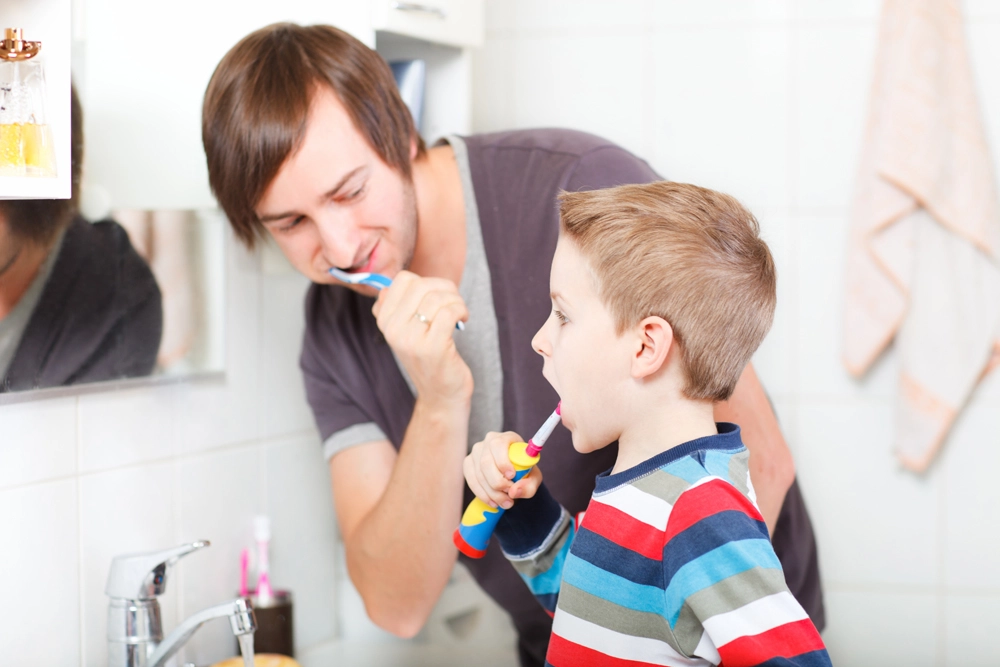
Oral health education alone for kids is not enough

Oral health education alone for kids is not enough

Researchers from the Cochrane Public Health Group recently published a review of 38 evidence-based studies on effective community-centred oral health promotion interventions for preventing tooth decay (caries), cavities and gum disease in children. Researchers reviewed interventions in a number of childhood settings including school, community, healthcare and home environments. The results of the review indicated that there was little evidence to show that oral health education alone made a difference in the level of caries in children. Some study results did show that oral health education improved gum health, oral cleanliness and oral hygiene care behaviours.

However, when oral health education was combined with other types of oral health promotion interventions, the impact on children’s oral health was far more positive. A significant improvement in the reduction of caries in children’s baby teeth occurred when oral health education was combined with supervised tooth brushing using fluoridated toothpaste. Caries in children’s permanent teeth were reduced when oral health education was combined with professional dental checkups and preventative care. Other interventions that benefit children’s oral health (when combined with oral health education) include:

  • provision of toothbrushes and toothpaste
  • sugarless non-citric chewing gum
  • motivational mentoring
  • professional dental care
  • application of fluoride varnish and fluoride supplements
  • training of non-professional educators and caregivers
  • improved child diet and restrictions on sugar intake
Oral health education alone for kids is not enough

Essentially, the Cochrane Public Health Group’s review concluded that a range of interventions were necessary to ensure the optimal oral health of children – keeping them free from tooth decay and gum disease, as well as preventing the chronic oral conditions that could affect their future adult health. Sources: “Community-based population-level interventions for promoting child oral health.”, Authors: de Silva AM, Hegde S, Akudo Nwagbara B, Calache H, Gussy MG, Nasser M, Morrice HR, Riggs E, Leong PM, Meyenn LK, Yousefi-Nooraie R. Published: 15 September 2016.

Gum disease linked to faster cognitive decline in Alzheimer’s patients

Gum disease linked to faster cognitive decline in Alzheimer’s patients

Gum disease linked to faster cognitive decline in Alzheimer’s patients Numerous studies have shown that seniors with Alzheimer’s disease have an increased risk of developing gum disease (Periodontitis). Alzheimer’s patients are also at higher risk of health problems including infections, aspirations, loss of balance, malnutrition and dehydration. The main reason why Alzheimer’s patients are more vulnerable to gum disease is because of their reduced ability to take care of their own oral health and hygiene. If you lose your memory, you may simply forget to brush your teeth. But the arrow linking Alzheimer’s and gum disease may point in both directions. 

According to researchers at King’s College London and the University of Southampton, Alzheimer’s patients with gum disease declined at a rate six times faster than those without it. Professor Clive Holmes, senior researcher from the University of Southampton, said the results from their study (2016), showed that chronic inflammatory conditions, associated with gum disease, were detrimental to the progression of Alzheimer’s. “In just six months you could see the patients going downhill – it’s really quite scary.” When gum inflammation occurs, immune cells produce more antibodies.

Gum disease linked to faster cognitive decline in Alzheimer’s patients
This increases the overall levels of inflammation in the brain, which researchers have identified as the driving force behind the development of Alzheimer’s. And then there are the bacteria. In an earlier study (2013) from the University of Central Lancashire (UK), researchers identified a anaerobic bacterium called Porphyromonas gingivalis present in the brain tissue of Alzheimer’s patients – but not in the brains of healthy patients without the disease. This bug is usually found in chronic oral infections. When chronic inflammation factors compromise the impermeable blood-brain barrier, this type of oral bacteria can enter and travel freely within the brain. Once the bacteria has set up inside your brain, further inflammatory responses occur, which contribute to the formation of beta-amyloid plaques between the brain’s nerve cells (neurons). As this insoluble plaque hardens and accumulates, it binds strongly to the nerve cells, and affects their relay signals and your overall brain function – in other words, your ability to remember. 

The findings of the study showed that if gum disease can be controlled, it may help to slow down the development and impact of Alzheimer’s disease and dementia in patients. And what are the best ways to prevent gum disease? Brushing your teeth, flossing and using a mouthwash regularly are recommended. Carers also need to ensure that Alzheimer’s patients lead a healthy lifestyle, and follow a good oral health and hygiene routine. However, if you already have gum disease, everyday activities, such as eating and brushing your teeth, may actually inject harmful bacteria into your bloodstream towards other parts of your body – including your brain.

In this case, it is advisable to seek professional treatment, guidance and support from your dentist or hygienist. There needs to be more research undertaken to fully understand and pinpoint the links between poor oral health and Alzheimer’s disease. But by maintaining good hygiene and controlling gum disease, you are taking steps in the right direction for a healthy mind and body – now and in the future. Sources: University of Southampton. (2016, March 10).” Link between gum disease and cognitive decline in Alzheimer’s.” PLOS/ONE University of Central Lancashire. (2013). “Determining the Presence of Periodontopathic Virulence Factors in Short-Term Postmortem Alzheimer’s Disease Brain Tissue”. Journal of Alzheimer’s Disease, 2013, DOI: 10.3233/JAD-121918.

Modern dentistry gears up for the digital age

Modern dentistry gears up for the digital age

Since the mid-90s, when advanced CAD (computer-aided design) systems were first used to help create crown materials, digital dentistry has developed rapidly. The latest digital dental hardware includes intra-oral scanning, dental sensor technology, robotics, CAD/CAM and 3D printing.

As a result, a lot of traditional manual dental processes have been, or are about to be, taken over by these emerging digital dental technologies, in the near future.

For example, the process of a traditional crowning procedure usually takes two appointments. It involves making moulds of your teeth, outsourcing manual crown fabrication to dental labs, and wearing a temporary crown in the meantime. Total time: approx. 2 weeks.

Now, there is the quicker option, of a single dental session, for a single crown restoration, utilising CAD and CAM (computer-aided manufacturing). How is this possible?

First, a digital scan of your mouth is imported directly into computer software that will generate the ideal 3D shape of your crown as a 3D file. This 3D file is then imported into a milling machine which carves the crown out of a ceramic block automatically. Then, all that your dentist needs to do, is – bond the newly fabricated crown to your prepared tooth. Total time: 2 hours.

And it doesn’t stop there. Scalpel, needles, use of anaesthetic, drills and sutures are gradually being replaced by lasers. Lasers result in less pain, discomfort and trauma during your dental procedure.

Digital dentistry will also assist your dentist. They won’t need to rely solely on steady hands and an eagle eye for dental procedures that have no margin for error.

Perhaps in the not too distant future, your check ups and dental treatment won’t even be performed by a human dentist, but by dental robots managed by dentists.

Child Dental Benefit Schedule still open for business

Child Dental Benefit Schedule still open for business

The Child Dental Benefits Schedule (CDBS) has been on a roller-coaster for the last two months. The ride started in 23 April with the Government announcement of its closure on 30 June, 2016. The announcement caused a media outcry from Australian dental organizations, the Labour party and the greater community. The Australian Dental Association (ADA) condemned the closure, as well as the new dental program that will replace it – the Child and Adult Public Dental Program (CAPDS). Leader of the Opposition, Bill Shorten strongly objected to the new policy by stating, “This is the equivalent of cutting Medicare and flooding the emergency wards of Australian hospitals with more patients.” He went on, “The idea that you improve the dental health of children by cutting $1 billion and making all the children of Australia have to go through public waiting lists to get dental care support from the government is a dental care hoax.”

By late April, news of the closure hit home. Thousands of families across Australia, with an outstanding balance on each of their children’s $1000 benefit cap, started booking dental appointments before 30 June, 2016. They were also saying good bye to their personal family dentists and rejoining the long public dental waiting lists to see a random dentist. But an unusual thing happened in the final sitting session in Parliament before the double-dissolution federal election on 2 July. The new legislation was not passed leaving both dental schemes in limbo, as the Government went into caretaker mode.

However, by delaying the implementation of the new CAPDS and leaving the CDBS open, until after the Federal election, the Liberal Party did avoid a possible voter backlash on the hot topic. So, the Department of Health has kept the CDBS open with no specific closure date. And if Bill Shorten becomes Prime Minister, the CBDS will stay open for the Aussie kids that need it the most. The ADA is appealing to the Australian public to support an online petition to save the CDBS – the best public dental program to service the diverse needs of children in Australian communities today. To view, support and sign their online petition, please click the following link: change.org

The oral and gut microbiota work together to keep us healthy

Even though the oral and gut microbiotas appear to be separate entities, they work synergistically to nourish our body and protect it from infection and disease. So it’s important to keep in mind that you can’t effectively improve one microbiota without improving the other as well. For example, you might take a daily gut probiotic supplement – but what about the billions of oral pathogens you swallow every day that make it through the stomach acid barrier and colonise the gut? So, what are the most beneficial ways to give your probiotic oral bacteria a huge boost?

Child Dental Benefit Schedule still open for business

Tips to improve your probiotic oral bacteria and more

You can nurture your probiotic oral bacteria, optimise your oral PH and improve your oral health with the following foods and oral care/lifestyle habits:

  • Eat, chew or drink (with pulp) nitrate-rich high fibre vegetables to maintain and improve the oral microbiome including celery, beetroot, rocket, chard, rhubarb, fennel and oak leaf lettuce.
  • Eat, chew or drink (with pulp) prebiotic high fibre foods that help feed probiotic oral bacteria, including nuts, fruits and seeds.
  • Chew more fibre to create an “oral garden mulch” to feed probiotic bacteria.
  • Use your toothbrush, flosser and tongue scraper to manually remove bacterial plaque – helps keep bacterial numbers between species balanced and in check.
  • Avoid excessive use of anti-microbial mouthwashes since they can harm the oral microbiome, taking out good and bad bacteria. Use mouthwashes with prebiotics that target specific bacteria.
  • Avoid alcohol. Binge drinking can completely disrupt the diversity of your oral microbiome and enable harmful bacteria to flourish.
  • Avoid smoking which can disrupt saliva flow and dry out the oral cavity.
Dentists to join the fight against heart disease?

Dentists to join the fight against heart disease?

he theme for World Oral Health Day 2016 is “Health Mouth. Healthy Body”. It aims to raise awareness of the link between oral health and other diseases of the body. In today’s post, we continue to spotlight this theme with a focus on the link between gum disease and heart disease. In Australia, heart disease is the single biggest killer of women – with three times as many women dying from it than breast cancer. There is a good community awareness and understanding of heart disease risk factors, such as smoking, high cholesterol, high blood pressure, obesity and physical inactivity. That’s because there is a lot of medical-sourced information and press-coverage to increase awareness of this set of risk factors.

Yet the oral health links with heart disease are usually not mentioned in any medical-sourced information about heart disease risk factors – even though there is a lot of scientific  research and evidence to support this link. Why? Because Dentistry is a separate field of study from Medicine. But in 2014, the University of Florida’s College of Dentistry and College of Medicine presented a joint study at the annual meeting of the American Society for Microbiology.

Dentists to join the fight against heart disease?
The medical and dental researchers studied mice infected with four specific bacteria that cause gum disease in humans. After the bacteria had spread to the mouse heart and aorta, the researchers detected an increase in cholesterol and inflammation in the test mice – risk factors associated with heart disease. The study was part of a greater study on the links between gum disease and over-all health being conducted by the UFL’s Department of Periodontology Dr. Lakshmyya Kesavalu, an Associate Professor within the department explained, ” The mouth is the gateway to the body and our data provides one more piece of a growing body of research that points to direct connections between oral health and systemic health.”

Dr. Alexandra Lucas, a cardiologist from UFL’s College of Medicine and co-investigator in the research stated, “Our intent is to increase physician awareness of links between oral bacterial infection and heart disease. Understanding the importance of treating gum disease in patients with heart disease will lead to future studies and recommendations for careful attention to oral health in order to protect patients against heart disease,” The American Heart Foundation has since acknowledged the causal links between gum disease and heart disease.

Dentists to join the fight against heart disease?

They list a number of related research articles on their website. To date, the National Heart Foundation of Australia has not raised awareness to help increase public knowledge  about the potential effects of gum disease on heart health. Clearly, the medical and dental fields still need to establish better co-operation, so that gum disease in not overlooked – when treating patients for heart disease.

3D-printed teeth kill 99% of oral bacteria instantly – before brushing

3D-printed teeth kill 99% of oral bacteria instantly – before brushing

Dutch researchers from the University of Groningen, Netherlands, have created an antimicrobial plastic material for use in 3D-printed replacement teeth, crowns, veneers and orthodontic devices. The new material kills 99% of oral germs and bacteria – before you brush and floss your teeth. The team of researchers conducted research and development of a new antimicrobial composite polymers because dental implant related infections posed a major health risk world-wide. This type of infection is the leading cause of the failure of implanted dental devices.  For example, dental restorations that are damaged by bacterial infiltration can result in secondary cavities beneath the restoration.

It is estimated that over 20 billion dollars are spent annually in the United States by dental patients – to replace composite resin restorations that have failed for this reason. Professor Andreas Hermann and his team added antimicrobial ammonium salts to existing dental resin polymers. The positive charge in these salts disrupted the negatively-charged cell lining or membrane of the bacteria. This caused the bacterial cells to rupture and die.

3D-printed teeth kill 99% of oral bacteria instantly – before brushing
And while the new material can kill bacteria on contact, it is harmless to human cells. To test the antimicrobial properties of the new polymers, the research team  coated 3D-printed dental objects in a mix of saliva and the Streptococcus mutans bactirium which causes tooth decay. Incredibly, the team found the polymers killed over 99% of the bacteria. In comparison, less than 1% were eliminated by a control sample with no added salts.

While further testing still needs to be carried out for long-term effects and compatibility with toothpaste, these new polymers are shaping up to be a  game-changer in the general medical and dental industries.  Reference Research paper: “3D-Printable Antimicrobial Composite Resins”, 10/2015, University of Groningen and University Medical Center Groningen 9713 AV, Groningen, The Netherlands.